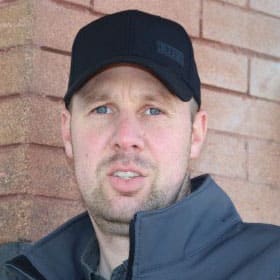
Bobby Bosler: Welcome to the Thee Generation Podcast. I’m Bobby Bosler and I’m speaking to you today from Martinsville, Indiana, where my family and I are getting geared up and ready to go for our next tour out on the road with the war. In fact, just tomorrow from the time of the recording, I’ll be traveling up to Wisconsin and training the war team to head out on the road to reach young people with the gospel of Jesus Christ.
I’d appreciate your prayers for us as we train and then as we go. And our desire is to be fully equipped to reach the next generation with the gospel. In fact, that is exactly why I have our guest here with us today, so that you can be fully equipped to reach the world with the gospel of Jesus Christ.
You know, there are a number of different things you have to consider when it comes to reaching the world. Obviously, you’ve got to understand the theology of it. You’ve got to understand that you are weak, God is strong, and that there is no way in the strength of your flesh that you could ever turn the world upside down with the gospel of Christ.
You’ve got to understand that God has a will for you, a very specific set of orders that only you can fulfill. You’ve got to surrender to that will. You’ve got to depend on God’s power to fulfill his will.
But, you know, I think sometimes it’s really easy for us to overlook the very, very practical needs that we need to understand and be equipped and ready for when it comes to reaching people with the gospel. And while there are a whole lot of things that I could talk about here today, I could talk about evangelism training. That’s practical.
That’s necessary. We could talk about Bible education and just learning what it means to be in the ministry. That’s a part of things.
But our guest here today is going to give you a very, very specific part of what it means to be a missionary and how you can be equipped to reach a foreign land with the gospel of Jesus Christ. So with that preface, it’s my pleasure to introduce to you Matt Stallman. Brother Stallman, please share with us what God’s put in your heart.
Thank you, Brother Bosler. I appreciate you giving me the opportunity today to speak, to share my heart with your audience here. Kind of lay some background so you understand where we’re coming from.
In 2000, 2001, my wife and I were missionaries to Malawi, Africa. And we went there with all the excitement and zeal that you could imagine and started preaching immediately, handing out scripture, giving out tracts. People started coming to Christ, began to train these people.
And the ministry was exciting. It was refreshing. After being in places in the States where hearts were cold, man, Africa was wonderful.
But the ministry wasn’t the problem there at that point. It was just day-to-day life in Africa was very difficult. We were young.
We were in our young 20s, had two small children, and we began to experience the difficulties of Africa in the sense of medical issues. We began to have trouble with malaria. We were sick.
My wife one day and then one of our children the next and then me, and then it was just a cycle of being sick. We had a lot of security breaches, and so we would have our house broken into at some points. We would have vehicles, attempts to steal them.
We had things stolen from us at night. We had a lot of these things going on. And so as the ministry is expanding, people are being discipled, day-to-day life really kind of became a drudgery for us.
It became extremely difficult. And after just about a year of that, when we returned home to take some rest and try to get over the malaria that we had been struggling with, a pastor friend of mine asked me, he said, Brother Matt, do you anybody tell you? I mean, did you sit down and talk with anybody?
Did they warn you about these things? And I said, no, nobody really sat down with us and told us about some of these difficulties. And so from there, I kind of had it in my heart that maybe this was something we would do and begin to look at other ministries.
And there are a lot of good ministries out there who have great classroom education. They do the academic side of warning people of what missionaries are going to endure and live through. And I didn’t get any of that.
But 2006 came along. We met a missionary who had a heart to help young people prepare for the mission field. And we put together a concept.
You could call it a boot camp. We call it a missionary scenario. But we run these camps with the goal in mind of let young people actually experience some of the hardships of the missions.
So we call it a worst case scenario. So like I mean a best case scenario is you go to the mission field and you got a nice hotel. All the food is good and the fellowship’s great.
There’s no security breaches, but that’s not always real life. And so we train in a worst case environment. And so when we set up a camp, whether it’s seven days or 14 days, we set it up as though we’re going to go into a place.
This last year was India. And of course, we’re in Southern Missouri, but we’re trying to make it, give it an Indian feel as much as possible. We’ve got all Indian food.
We’ve got Indian style toilets. You know, we try to develop that sense of that we’re actually overseas. And inevitably at a camp, we’re going to make things go wrong.
And when those things go wrong, students really begin to get some of that feel of what could happen on the mission field. Some of those difficulties include medical scenarios where we have car accidents. We have different traumatic things going on.
We deal with tropical diseases. We deal with security issues, everything from pickpockets all the way up to serious threats where maybe we’re engaged in some type of a civil conflict, some kind of riot that takes place. We deal with mechanics and emergency driving, off-road driving.
So we try to bring some of those difficulties in the mission field to life here in a safe environment where we can begin to learn to cope with those things. And not only physically does it help us, but emotionally. A lot of times the breakdown on the mission field is emotional.
And so physically we’re able to endure some of these things, but emotionally, day after day we’re taxed, we’re wore down, and we really begin to come apart. When we talk about culture shock on the mission field, we estimate that usually takes place in some time in that six to nine month period on the mission field.
And culture shock can really be defined as this, just being tired of the people, the culture, being sick of the daily grind in a foreign country. Even the things that on a missions trip are exciting, well, now that stress has overwhelmed us, and we begin really to almost hate the people that God has called us there to reach.
And so in a missions camp and in a hard environment, when we put the pressure on, We bring about an emotional experience that by a few days into camp, you’re not only physically tired, but you’re also emotionally tired. And the excitement that you had, the adrenaline that you had coming in is now starting to wear off. And so now we come to the climax of the camp is this spiritual breakthrough that happens.
And what we try to do is we try to really instill in students that to do what we’re called to do in missions, we must be filled with the Holy Spirit of God. And so we learn that in the power of the Spirit of God, we endure through these difficult trials. We endure through the emotional hardships.
And at the end of this camp, Lord willing, each student will come through having had a touch of revival, understanding that, yes, evangelism is hard. Yes, ministry is difficult. third world living conditions.
It’s tough physically. It’s tough emotionally. But if God has called me to do this, then I will be surrendered to the will of God.
I will be obedient and I will stay as long as God wants me to stay. So this is a breaking process for a lot of young missionaries.
And when I say young missionaries, everyone from high school students, 16 on up, 16, 17, 18 year olds we have college students and then we have young missionary families who are either on deputation or sometimes on furlough but we’re really striving to make sure that not another missionary comes home without being prepared and warned for some of the difficulties that lie ahead i would love the listeners today to go to our website it is bbmissions.org that’s bb for beyond Borders, bbmissions.org.
There you can find out about the camps, the schedule that’s up and coming. You can also subscribe right there on our website to the newsletter and to the magazines that we put out for teenagers to encourage you to surrender your life and prepare yourself for missions. Anything that we can do to be a blessing and encouragement to young people that are striving to live for God, we would love to be a part of.
So stay in touch with us, go to the website, shoot us an email, check out our Facebook page, and we would love to hear from you. Amen. Thank you so much for that, Brother Matt.
And young people, I want to really encourage you to check out their website. I believe it was bbmissions.org there. And they’ve got a kind of a video that walks you through what the missions camp is all about.
And you know what? If you get a chance to go to that missions camp, you might meet some young people maybe you’ve met at the Thee Generation Youth Summit, but I know God would use it in your life. He would use it to equip you.
It’s not your typical summer camp, and it’s something that’s very narrow, very targeted, and it’s for those that really do want to serve the Lord on the foreign mission field all over the world. And so I really would also encourage you to subscribe to that magazine and get updates from their ministry. I know it would be an encouragement and an inspiration to you.
We’ll have Brother Matt back on the podcast here at some point in the future to challenge you for what his vision is for missions and for you. But we’re so grateful for folks like this and folks all over the world, their passion, the pulse that beats through their veins is to reach the world with the gospel.
And folks like Brother Stallman who understand what it means to be filled with a spirit by surrender to God and dependence on his power. That just thrills me. And so young people, I just want to encourage you here this week as you’re facing the will of God for you, surrender to it and depend on his power to do it.
And God will use you to make a difference in someone else’s life. Thank you so much for listening. That’s T-H-E-E generation.org.