TGYS
Oct 26, 2026 /
Rising Above Our Feelings
Your feelings are real, but they do not always show you the right way forward. In this workshop, Stephen Zempel examines John the Baptist’s doubts in Matthew 11 and explains how God’s Word can guide your response when emotions and faith seem at odds. Bring your struggles into the light, feed your faith with Scripture, and trust the Holy Spirit to help you take the next right step.
Stephen Zempel begins by distinguishing emotions, feelings, and moods and explaining that experiencing emotion is not inherently wrong. Using John the Baptist’s question from prison in Matthew 11, he develops three practical responses: focus faith on who God is and what He is doing, feed faith through Scripture, and exercise faith by acting on God’s Word. The workshop encourages talking with a trusted counselor and taking the next right step, while its closing aviation illustration emphasizes dependence on the Holy Spirit rather than forcing obedience through willpower.
Topics Discussed
- Emotions as part of human experience and the example of Jesus
- John the Baptist’s trial of faith in Matthew 11
- Focusing, feeding, and exercising faith
- Speaking with a trusted counselor about difficult feelings
- Following Scripture and relying on the Holy Spirit
Key Takeaways
- Having difficult feelings does not make you sinful or require you to suppress all emotion.
- Let God’s Word guide how you interpret feelings and circumstances.
- Speak honestly with a trusted counselor instead of keeping every struggle to yourself.
- Doing what is right despite contrary feelings can be an act of faith rather than hypocrisy.
- Take the next right step in dependence on the Holy Spirit and God’s grace.
Related Messages
If this episode encouraged you, please take a moment to leave a 5-star rating and review on Apple Podcasts, Spotify, or YouTube Music. Your feedback helps others discover the Thee Generation and be challenged to live a life of total surrender to God.
This Sermon is a part of a series
Rising Above
Stephen Zempel: Good. So we already established everybody's feeling good today. But some days that's not the case.
Some days, you know, our feelings are a challenge and we've got to rise above our feelings. Yeah, some days we feel fine. We don't think about it.
But other days, our feelings starts to influence our decisions, starts to influence our outlook on life. And then you know what? Our walk of faith becomes interrupted by our feelings when really it should be the other way around.
Our faith should interpret our feelings. Our feelings shouldn't interpret our faith. So that's what we're going to be talking about this morning for just a few minutes.
Would you join me in prayer? I know everything's a little distracted here. We're running back and forth, doing this and that and the other.
So let's just pause for a moment. Let's be quiet and still. Let's bow our heads, close our eyes.
Let's pray and ask for the Lord's blessing and guidance here. Let's pray. Our Heavenly Father, these are important points and important moments.
And in this session, we pray you meet with us, that your presence would be here and uplift and encourage each one. Would you allow us to have our minds open and clear to understand biblical principles that are here.
We ask that you would, in this moment, in this hour that we have together, that you would address those needs that need to be addressed, encouraged where people need to be encouraged, and we pray it in Jesus' name.
Amen. All right, I remember a time a few years back when I literally had to rise above my feelings. Do you want to hear about this?
I was about 17 years old. I just started working for a painting contractor, a painting company in the Indianapolis, Indiana area. So there I was.
I was the new guy on the crew. And one of the first jobs I ever went to was a really big house. It was kind of central Indianapolis.
Kind of strange that in that very urban setting, there's this huge old Victorian house, three stories tall. Can you picture it? Just the ornate woodwork on the outside, all these different features.
It was not one of these modern flat-sided, big slab type of houses, just a lot of stuff going on in that house. A little bit of a complicated job.
And because I was new on the crew, I got to do the dirty work that the older folks didn't want to do. There's a couple of guys on this particular crew that were younger, myself and another young man named Patrick. And then there's a couple of older guys.
I've actually forgotten their names. They had been painting for a while, and they were very experienced and mature and would be expected to have the answers to any problem or dilemma that might come up on the job site. Well, we had a little problem.
The very tallest peak of the tallest gable of that old Victorian-style house, we couldn't reach it. We had painted everything else on this house. It was probably a three color paint job.
Any of you in here painters? Any painters in this room? It was a little bit of a headache, this job.
You know, all this different detail and trim on the house. And finally we had the whole thing done. But can you picture in your mind, three story tall house, very high peak, the very highest peak of this house.
We couldn't reach it to paint it. Longest extension ladder we had was a 40 foot ladder. And it was pretty standard in those days.
I don't know if these days technology has improved. Maybe we got longer standard extension ladders than that. But typically with the 40-footer, that was the longest we had.
We had that thing fully extended. We couldn't reach the top of that. And so we were up there on the top of this 40-foot ladder.
And part of the challenge was we had to compete with all the different stuff going on on the side of the building. So there was these porches sticking out and little things, you know, features, turrets, and I don't know what all else. And so we had this ladder, 40-foot ladder.
Does 40 feet tall sound impressive to you or no? Technically a 40-foot extension ladder, fully extended, it's not quite 40 feet, but it's enough. It's enough to make you think about your life decisions when you're standing up on top of it and a little breeze going, okay, and you're trying to reach up there like this and paint that last bit.
We couldn't reach it. So, like I said, there's a couple of older, mature, experienced people on the crew that should have the solution to this dilemma. Well, they came up with a solution all right.
They said to my buddy Patrick, who was new on the crew, they said, "Hey Pat, take that step ladder right there.
You with me? Charity, don't get ahead of me. I'm telling this story."
They said, "Pat, take that step ladder right there, climb up to the top of the 40 foot ladder, put the stepladder on top of the extension ladder.
OSHA was nowhere nearby. I said, all right, this sounds fine. I was standing on the ground.
Sounds like a good idea. They said, all right, Steve, referring to me, what you're going to do while he stands on the top of that 40-foot extension ladder and holds the stepladder in place, you're going to climb the ladder, climb over him, And then you're going to climb up on top of the stepladder that's propped on top of the 40.
And you're going to reach up in the breeze there. And you're going to paint that highest peak. I had no choice.
I was the low guy on the totem pole. I was the new guy on the crew. I said, all right.
And that's how we finished that house. I went up there with, I don't know, a brush or a mini roller or something. Climbed up the top of that 40-foot extension ladder, fully extended.
Climbed over Pat, who was white knuckle on that. I mean, he was holding that thing. He was up there like this.
I climbed over him from one ladder to the other. Climbed up the step ladder that was on top.
These two older guys, I just now remember it. I can remember it. These two older guys, they said, don't worry.
We'll be at the bottom. We'll be holding the ladder. So I felt real good about that.
Now I got to the top of that whole Tinker Toy contraption and standing up there painting away. I looked down, and sure enough, the two older guys were at the bottom of the whole deal, and they were standing there like this with their foot kind of resting, smoking a cigarette, paying no attention at all to what was going on up there. They didn't care.
And I finished up that peak. I wrapped it up. We all unfolded the whole thing, got back down safely to the ground, and as soon as I got back down, those two older guys, they just started laughing at me.
"Steve!" They said, "Your legs were shaking up there." I can't imagine why.
Why would my legs be shaking? I mean, they probably are absolutely accurate. I don't know.
I was only focused on survival. And I was not feeling real comfortable about that whole deal. I was afraid.
My feelings, my feelings were right there in my throat. I knew exactly where my feelings were because, you know, physically they were constricting my breathing.
I had to rise above the feelings and do the job that needed to be done. I don't recommend doing a paint job that way.
The feelings said no. The job requirements said yes, we had to go ahead anyway.
Well, it's just an entertaining story to kind of prompt our thinking. Sometimes in life, our feelings are saying no. But the true and the right way calls us.
The biblical path says this is the way you need to go. Our feelings said you need to abandon this path. This isn't where you should be.
This is what you should be doing. And what do we do in those moments? I want to give you today a few biblical principles just to think on, to develop patterns of life and patterns of thinking.
Emotions and feelings are a part of us. They're a part of a whole life experience. They're very, very tangled up in everything that we do and experience and the people we know.
In a short 35 minutes, I cannot possibly hope to address every question or issue that might come up regarding a person's feelings and walking by faith in spite of feelings. I can't do that, but I can give you some principles based on the Bible that'll help you to develop patterns in your life and that's what we're going to do this morning. Let's define terms quickly and then we'll move on.
In this session I probably will use the term emotions quite a lot, probably use the term feelings quite a lot. They're very, very similar. There's a lot of overlap.
They're not exactly the same. So emotions are the way that we mentally and physiologically respond to the experiences of life as they come our way. Happiness, sadness, whatever it may be.
How we are impressed by the experience of life. And the feelings is the way that we interpret the sensations, the emotions, the experiences. So it turns into a general feeling, not quite the same thing.
For example, when I wake up early in the morning and I have to go right away to work and I've got an early morning meeting, early morning class that I have to teach, I have a general feeling maybe of lethargy or not feeling excited about it. It's not exactly the same thing as emotions. You could pencil in if you want.
There's another step in this process and that is mood, mood, M-O-O-D, which is again, it's a longer term pattern of these two, emotions and feelings. So, and that leads to a mood, as in, wow, she's in a great mood today. So, positive feelings and positive emotions characterizing in a bigger pattern her disposition.
And when we say the title of the session is rising above our feelings or as it may be rising above our emotions There's some overlap between those two That implies right away that there might be something wrong with our feelings and our emotions So help me out with this now. We're going to just talk quickly about facts Facts about feelings and then from there we'll open the Bible.
We'll look at some Bible principle having to do with faith First of all, first question here, are feelings wrong? Tell me, somebody. Are feelings wrong?
Emotions? Emotions of feelings. Are feelings wrong?
Bad? No. We can write that down right away.
If you've got a pen or a pencil. No. I think it's a pretty obvious answer.
It's not wrong to have feelings. And so right away, I just want you to understand this. As we go through the session, we are not trying to emphasize that God wants you to shut the feelings off.
Never have feelings. Never have emotions. Maybe, for some of you in here, that's no big surprise.
You knew that already. I wouldn't say that. But for some, that's kind of the way we think about rising above feelings.
God wants me to turn it off. As I go through the ups and downs of life, he doesn't want me to experience any particularly strong emotions. And if I do, I've got to stifle it right away and be like a sort of a spiritual robot.
Every day, just turn it off. No feelings. Don't feel anything.
Just do the right thing. No extremes of happiness or pain or anything like that. No that's not what we're getting at.
Here's a couple of uh other background points here. How about how about the example of Jesus. And it says Jesus past tense.
Did Jesus have emotions. We're thinking about his humanity his human experience. Jesus Christ is the eternal son of God.
But as he walked this earth. What do you know about that. Did Jesus ever have any feelings or emotions.
Give me an example somebody. Yeah go ahead. You have to just jump in there and just you know let me know.
Go ahead all right. We're familiar with this story john chapter well it's the end of john chapter one. And uh there he is he's overturning the money changers the tables.
And I don't have time right now to explain how dirty and rotten that whole practice was. But it said that Jesus was filled with zeal. Certainly his emotional state at that time was not warm and fuzzy you know.
So yeah Okay, another one.
Yeah, tell us about that, the emotional state there. What does it say? Yeah, Jesus said, my soul is exceedingly troubled.
My soul is distressed. These are words that, you know, in the Greek New Testament, wow, it means the greatest emotional turmoil a person could go through. She said, in case you didn't hear, the Garden of Gethsemane, Jesus was praying.
He described his own. He spoke to his friends. He said, I'm under emotional stress right now.
Yes? Oh, okay, so we're John the Baptist. You're talking about Jesus heard about that.
You said Jesus wept. The first two words came out of your mouth, and right away my mind leaped to another story. Not John the Baptist, but John 1135.
We have that verse memorized, don't we? And so we all know this, the shortest verse in the Bible, but it's a verse that indicates Jesus' emotion, Jesus wept. Clearly he was in, you know, in that situation, John 11, when the other people standing around saw Jesus weeping, they said, look how much he loved him.
So there's an emotion of grief we see. There's also the emotion of love. John?
Hungry, okay. Yeah, hunger and thirst, right? Thirst as well.
We've got a John 19 indication there. Yeah, yeah, yeah. Anybody else real quick?
I've got a whole long list in my notes, but you know this. Go ahead.
Yeah, that's right. Another instance, too, that Jesus beheld the city. The Bible says he wept over it.
He was concerned for the future of these people and their spiritual destiny. Very emotional, right? And like I say in my notes, I've got a long list here.
I don't know if it's necessary for me to read this whole thing. Sometimes Jesus was angry. Sometimes he was troubled.
He felt grief. He felt agony. He even in one instance expressed that he was amazed by something.
He rejoiced. Luke 10.21, full of joy, and so on. How about this?
This one might be slightly more difficult to think of. How about God? God the Father, does he have emotion?
How about that, Jess? Yeah, yeah. And what does it say about God's emotion there?
Oh, okay. Okay, yeah. Angry God's anger, we read about that sometimes.
God's wrath sometimes is expressed. Anybody else? Yep.
Okay, so what is that? Genesis 6, isn't it? And God said, I'm sorry about it.
Repenteth me? Is that how it's said in the English translation there? And yeah, okay, there's one.
Any others come to mind? Is that a hand right there? Yep, go ahead.
Audience member: When Jesus was baptized, God said that he was well pleased.
Stephen Zempel: Oh, yeah, okay, that's a great observation there, because it's not just negative. We talk about God's anger, God's wrath, God's sorrow. He said, this is my beloved son.
I'm very pleased with him. Very pleased. Listen to him.
Yep, that's good. Okay, you got another one? Love, yeah, isn't that kind of all over the Bible?
God's love. I've got another list for you here that in my notes it starts off with. God's everlasting love.
We do have the expressions of God's anger and wrath, God's compassion. Psalm 135, God's jealousy is described. Exodus 20, also in the book of Zephaniah 3, description of joy and delight.
Very interesting to me that in the human experience of Jesus, also descriptions of God we have in the Bible, there's a pretty even mixture of emotions. And what I mean is what we would think of as positive and negative emotions. They're all there.
It's not all just love and compassion. That verse, God is angry with the wicked every day. Wow.
Some of these we might interpret as negative. And so we begin to think. We begin to be thoughtful about our own emotions.
John chapter 1, I'm sorry, Genesis 1, verse 26 and 27, we are made in the image of God. God didn't intend for you and me to just stop experiencing emotions. It is a beautiful creation that God has made.
Humanity. Think about it. Every single person in this room, different.
You know, two parents, mom and dad, can have several children. Five, six children. They're all different.
How is that? How does that even happen? They're all different.
And they'll experience life in a different way. You know this, don't you? You can put ten people in the same experience and they can come away with twelve different emotions.
You know, twelve different interpretations. Some aren't sure what they felt about it. You know what I mean?
I was pretty happy about that. Oh, no, I thought it was terrible. Wow, I went through the whole thing.
You know, we have mixed emotions sometimes. Have you ever heard anybody say that? How did you feel about that decision that was made?
I have mixed emotions. Well, sometimes we don't even know what we feel. I'm feeling stuff.
I don't even know what. Just feeling things. All right.
It's not a question in our notes, but hey, dealing with emotions and feelings, is that a male problem only, or is it a female, male and female?
It's both. I read an interesting book. Oh, that got us going.
We just thought it was men had a problem with their emotions, but no, sometimes women too.
I read a very interesting book a couple years ago, and the theme of the book was how sometimes men and women don't understand each other. You know, that was the theme of the book. It was not a short book.
One point that was made in the book I found very fascinating though it said it was describing men and women definitely both feel emotions no doubt about it but they said there's been studies done by neurophysicists or I don't know what is it people who study the neurology the physiology of the human body and they said it's very interesting the actual experience of the same emotion is different for men and women.
What does that mean? So, for example, man feels sad, a woman feels sad, but the way they actually experience the emotion is a different experience. Isn't that wild?
Like the actual chemicals that are present, the actual processes of the brain, whatever hormones might be involved and all that, it's different. So a woman's sadness, and of course every individual is different too, right? We know that, but the way that a woman would process and feel an emotion different than the way that a man would.
They're both sad, no doubt about it. But this may be one of the reasons why men and women, sometimes they kind of, you know, they can't quite understand. The man, he's sad, and the woman, she's sad, and, you know, husband and wife, but they're not feeling it in the same way.
How about this? Another question, we got to keep on moving here. What are some inappropriate ways of dealing with problematic feelings?
Now we're going to start to get down to business here. Sometimes our feelings take over and we feel feelings, which we've already established. It's not bad, but then the feelings begin to direct our mindset, our interpretation of life, and even our walk of faith.
Feelings such as anger. I'm really angry. And then our choices begin to be affected.
Bitterness. I can't get over what he or she did to me. Just can't.
And then that affects us. Or, I don't know, what might be another one. Frustration.
I'm really frustrated about this experience. So tell me just a few ways that would be not the right way to handle a feeling like that. What would you say?
Anybody? Yep. Oh, that's interesting.
Oh, that's an interesting observation. Yeah. Now start to think I'm a martyr here.
The whole world's against me. Everybody hates me. Not a single person in this world likes me?
Wow. Yeah, that would be inappropriate. Okay, that's good.
That's good. Another one? Another one?
Another wrong way of, yeah? Vengeance. All right, so I'm going to get back at this person and we're going to get this thing squared away.
I deserve a fair shake and that person needs to suffer. Yeah, okay, vengeance. That would be wrong, right?
Somebody over here? Yep, right there. Cursing.
Cursing. All right, so you're going to explode with this bottled up, pent up. There's another maybe corollary point.
Sometimes we think we need to stifle the emotion, and we suppress and suppress and suppress until eventually it explodes. You know, it doesn't go away. It's still there, but it comes out with just the right trigger.
Cursing, that would be inappropriate. Bitterness. Bitterness, just hang on to it.
Hang on to it. Keep it simmering on that back burner. Yeah.
I don't think about it every day, but almost. Yeah.
Audience member: Violence.
Stephen Zempel: Yeah, violence. That would be inappropriate. So there's various ways it would be wrong managing these.
We do not want to follow the feelings. We do not want the feelings to direct our interpretation of life. As a matter of fact, we want our faith to interpret our feelings, not the other way around.
And underneath facts about feelings, the last question. Is it possible to do right in spite of challenging or problematic feelings? Is it possible?
Hey, real quick, somebody give me a good Bible story about some Bible character who did the right thing when the feelings didn't necessarily line up.
Okay, Jesus, yeah. Prime example, yeah. Yeah, okay, Jesus, he showed compassion to his disciples, including Judas.
Jesus and so many, yeah, we could mention a variety probably of instances, but we already mentioned that Jesus knew what was coming in the Garden of Gethsemane. He said that he was praying, not my will, but thine be done, and did the right thing anyway. Yeah, right there.
Tell us about that.
Audience member: Even though his brother sold him, he would still trust in God that everything was together for good.
Stephen Zempel: All right. So there's Joseph in the Old Testament as she described. The Lord was with him.
Genesis says a couple of different times. But yeah, he kept trusting in God in spite of the circumstances. No doubt his feelings and his emotions are all over the place.
There's a Joseph in the New Testament as well, and so I asked for clarification. You remember Joseph the carpenter. He found out his espoused wife, Mary, was great with child.
And you know, the biblical language there. But he found out she was expecting a baby.
The angel appeared and said, you need to marry her. Wow. Feelings, emotions.
He did the right thing anyway. Yes? Job.
Okay. How about Job? Tell us about that.
You all right, hon? What happened? Oh, man.
Oh, well, that doesn't sound good at all. So. She said, I'm going to the summit today even if I can't talk.
Job, thank you. I won't make you describe it anymore. Take it easy.
Job, sure, he experienced a great trial. He said, I'm going to trust God. What was the expression there?
Though he slay me. Wasn't that the verse? Isn't that what it said?
Though he slay me. I will trust him. Okay, they said our God can deliver us, but if not, we're still not going to bow down to that idol and others that we could mention.
It is possible to do the right thing in spite of feelings. I'll tell you this, that's not hypocrisy.
More than one young person has expressed to me, I felt I should go forward and respond to that invitation after the preaching, but I didn't want to be a hypocrite. I thought if I made a decision, I probably would be tempted to go back on it sometime. I didn't want to make a decision and go back on it.
That would be hypocrisy. No, doing the right thing in spite of your feelings is not hypocrisy.
That's faith. Let's talk about faith a little bit. 2 Corinthians 10, 4 and 5, it expresses to us just essentially what this lesson is about.
The weapons of our warfare are not carnal, they're spiritual. And we need to bring every thought into captivity to the obedience of Christ. So our faith needs to be in charge, not our feelings.
If you have a Bible, turn over to Matthew 11.
What an interesting story.
There it is point number two faith above feelings here we find in matthew chapter 11 first few verses of the chapter john the baptist a great man of God great prophet of God great hero of the faith nobody would deny that but even john the baptist found himself giving into his feelings his feelings began to affect his faith his feelings began to lead him to even say things that are pretty shocking.
John the Baptist, because he was such a bold preacher, he had been thrown into prison by King Herod. And at this moment, he's in prison. Day after day after day, all he can see around him is the four walls of the prison.
All he can smell is the awful odors of the prison. His everyday experience is just prison, prison, prison. And on the human level, all he can expect is death in prison.
And that experience leads to feelings and emotions, and those emotions begin to affect his faith. To the point that the very man of God who had pointed at Jesus and said, he's the Lamb of God. He takes away the sin of the world.
Go follow him. Now he's asking the question, is Jesus even who he says he is?
I don't know about that. And we can't look down on John, can we? Because you and I, we've been there.
Sometimes our feelings lead us astray, off the proper path, and we begin to question. Yeah, I know God answers prayers for some people, but he doesn't for me. Would begin to say things like this.
Well, I know the Lord loves a lot of people. He doesn't love me, though. I can tell that.
Just look around me. Just look at my experiences. Our feelings begin to lead us to say things like this.
Question. And we can be encouraged just by the simple observation. Hey, even great men of God go through this.
We read in the Scriptures about Moses. We read about Elijah. Both, obviously, great men of God.
Both of them struggling with discouragement, depression. Their feelings were in charge at certain moments. And they said to God, please kill me.
They both said that. And they were in a trial of faith. John the Baptist there in prison, he was in a trial of faith.
Matthew 11, verse 2. Now when John had heard in the prison the works of Christ, he sent two of his disciples and said, Art thou he that should come, or do we look for another?
He's wondering why what he believes to be true does not match up with his feelings and his experiences. If Jesus is actually the Son of God incarnate, if he's the Messiah, the long-awaited, hoped-for one, then why is John rotting in prison?
Why is he there? And he begins to think, well, maybe it's not Jesus at all. If Jesus really were who he says he was, I wouldn't be here.
I wouldn't be experiencing this. A trial of faith, there's many different ways of thinking of what a trial of faith is, but it's when your faith is tested. You believe something to be true, but your feelings don't line up with that.
You've got to choose which one you're really going to believe. Your feelings or what God's Word says.
God's Word says, "My God shall supply all your need, but your feelings aren't there." No, God doesn't supply my needs. God's Word says, "Look, the fields are white already to harvest," but you say, "Yeah, no, not in my experience, not in my neighborhood."
And how do we respond in moments like that?
Well, as I said before, I can't solve everybody's problems in a few short minutes, but I give you these principles that are, that will establish new habits and patterns of thinking for you if you take these simple practical steps. First of all, letter A, focus your faith.
Just in the short response that Jesus gave to John the Baptist, he was in prison, he was struggling, he was doubting, he was discouraged, his emotion led him to ask some even unthinkable questions.
Is Jesus really who he says he is? There's a response that Jesus gives. Look at verse 4, Jesus answered and said unto them, That's the disciples of John the Baptist who were asking the question, Are you really the Messiah?
Are you really the Son of God? Jesus answered and said unto them, Go and show John again those things which ye do hear and see. Even in that brief verse, a couple of important observations to help our focus get off of ourselves, off of our experience, off of what we're going through, and what God is doing in the world.
The response was, help John to focus on the presence and power of God. And the cross-reference in Luke's gospel tells us a couple of really remarkable miracles that Jesus had performed right at that time. Helped John to get his focus from the four walls of his prison, of his feelings and emotion, on what God is doing in the world.
Daniel chapter 6, fascinating story, is the story of Daniel in the lion's den. Have you ever read that story? The story of Daniel in the lion's den.
If you go back to Daniel chapter 6 and read the story of Daniel in the lion's den, you'll discover that that story is not about Daniel in the lion's den. So interesting. There's nothing in there about Daniel describing his experiences in the lion's den and how awful it all was and how amazing it all was.
It's not in the story. It's not in there. The whole story is told from the king's point of view.
Daniel wrote the story. He didn't even bother to tell us about all his trials, tribulations, and troubles in the lion's den. He didn't describe it.
He did describe what it did for the king. And Daniel had the maturity to know that his experience in the lion's den wasn't about him. We need to, in our overwhelmed state, overwhelmed by our emotions and our feelings, we need to, best we can, get the focus off of ourselves and onto what God is doing.
I'll give you this practical tip right here. John did the right thing. He talked to somebody about it.
He asked Jesus a question. And this is interesting to me. Very often, it's wonderful how clarifying it can be to just talk to a trusted counselor about your feelings.
And when you take the step of having to explain what you're feeling from somebody else's perspective, immediately, immediately things begin to clear up.
When you have to express, okay, what I'm really feeling, I'm feeling frustration. And here's why I'm feeling frustration because of what she did about the something or other. Right away the fog begins to lift.
Okay you've put a name to it. You've understood the cause of it. And you begin to understand it's not as big of a deal as I thought it was or it's not as complicated as I thought it was.
It's not even so much that that that other person is going to be able to right away solve all your problems and answer all your questions. But you begin to think from a bigger picture point of view. Focus your faith.
And uh what john the baptist needed to do is think about who Jesus was what he was doing looking through the right lens. What's God doing in this world. Looking upward rather than inward.
Getting perspective. Taking the long view of life. Hadn't john the baptist already said about Jesus.
He must increase and I must decrease. And isn't that exactly what was happening in that moment. But John had just forgotten about that.
He had just forgotten that it wasn't going to involve some decreasing on his part. Focus your faith on God who he is and what's he what he's doing. Number letter b feed your faith.
Feed your faith look at verse number five. The reply continues. Go tell John the things you do hear and see outside of his prison walls.
Verse 5, the blind receive their sight, the lame walk, the lepers are cleansed, the deaf hear, the dead are raised up, and the poor have the gospel preached to them. That's Matthew 11.5. Do you realize that Jesus is quoting an Old Testament Scripture right there from Isaiah 35, a messianic prophecy?
Jesus is quoting it and he's saying, that is me. I match the Bible prophecy. What I'm doing right now matches God's word.
Feed your faith. We know that faith comes from one source. It comes from hearing the word of God.
So we need to recalibrate every single day. Whatever cloud we're under, we need to recalibrate the compass. We've got to follow the compass.
Sometimes in the weight of some great pressure, stress, emotion. We think we're heading north, but really we're heading east. We've got to get into God's Word and recalibrate every day.
According to the standard of what the Bible says, that's how we need to interpret life. This sounds so basic, but yet sometimes we skip right over this. Just simply getting into God's Word as Jesus did.
He quoted Isaiah. He said, this is what it is. This is the real truth.
Align your compass based on this. Yeah, you're going through a rough time, John. As we said earlier, God doesn't expect you to feel happy about it.
Sure, it's prison. It's not good, but this is the reality based on God's Word.
Okay, I have written in another helpful tip here. Don't feed your feelings. This is kind of a sub-sub point, all right?
Faith needs to be fed by God's Word every day. So we can fly by the instrument panel, not fly by our feelings. We can make decisions based on Bible truth, which we constantly put into our minds and hearts, not just reactive based on what we feel like.
But you have to understand it's possible to feed your feelings as well. Somebody talked about this a little bit earlier. We have feelings of depression.
It's possible to just wallow in that. Hey, life hits us. Sometimes we feel a little discouraged.
We feel a little negative about some circumstance, but you don't have to sit there and scoop up the mud and put it on your head. You know what I'm saying? Sometimes you walk through life, your shoes get dirty, but you don't have to sit down in the mud.
Somebody said you can't stop the birds flying above you, but you can stop them from making a nest in your hair.
You don't got to wallow in it. Somebody did something bad to you, the thoughts come to you. You don't have to sit and dwell on it.
I'm not saying you're going to feel happy about what they did to you. You don't have to sit and focus and focus and focus on it. And just feeding your feelings instead of feeding your faith.
So we've got these helpful tips for you. Do the next right thing. I'll tell you the truth.
No matter how down and discouraged and depressed you are, if you care to look for it, you will be able to find what the next right thing is. A lot of times we just don't want to look, but you probably know what the next right thing is. By God's grace and by faith, do the next right thing.
Take the next step. And it's just wonderful how the pathway will clear up and the fog will begin to lift when you just simply trust God for the next right thing.
Number C, flex your faith. Well, of course, we've got to stick with this alliteration. What does that mean?
It means you've got to take a step. God's given you some faith based on his word, based on some bigger perspective of life. Now what do you've got to do?
You've got to act on it. It's not real faith until you take an action step. So flex your faith.
All right, do something now. And here's the final message. Matthew 11, verse 6, Blessed is he whosoever shall not be offended in me.
In the middle of the pressure of our feelings and our emotions, sometimes we get offended, spiritually speaking. To be offended means to be repulsed, to be pushed aside, to stumble away from the right path. That's what it means.
You find that word all over the Gospels, actually. People were offended in Jesus, in his message. They said, that can't be right.
I don't feel like what he's saying is the right way. They went this way. And there's a blessing waiting.
Jesus said to John the Baptist, and he says to you and me, if you stay on the right path, you keep on taking steps of faith, one after the other. The blessing is waiting at the end of that path, but you can't be offended. To be offended in this context is the opposite of continuing to walk by faith.
To be offended in this context is basically the same as following your feelings. Your feelings are going to lead you off the path. Faith is going to keep you on the proper path.
God doesn't say to you, stop feeling feelings. You can do the right thing, even if you feel a little tired, a little discouraged, a little depressed, a little bit sad. You can still do the right thing, and that's where the blessing is found.
Flex your faith. Faith is acting as if God is keeping His word. Faith is acting as if God is keeping His Word.
How about that? Acting as if. You've got to do something.
You've got to take a step. But God is keeping His Word. Not just God might.
Not just God keeps His Word to some other people. Acting as if God is keeping His Word. I've got a little story here.
Dr. Bob Jones Sr., years ago, 100 years ago, he founded a Bible college. That Bible college went through tough times.
Went through the Depression. Went through the First World War. Many times seemed like they were going to have to close the place down.
But they prayed, and by faith continued on. The college continued. Somebody at that time spoke to Dr. Bob Jones, Sr. And said, Wow, you have great faith.
And he said, I do not.
I do not have great faith. But he said this, I act like I do.
And he said, I found it amounts to the same thing. Well, that was his way of saying, my feelings aren't there. You say I have great faith.
My feelings say no. No, you don't. But you know what?
I act like God's still in charge, and God's still in control, and God still loves me. I act like it, and it turns out to amount to the same thing. It's kind of like having great faith.
Act as if God is keeping his word. In the rest of this passage, so encouraging to me, Jesus turned right around. You can see it in the following verses.
He spoke to the crowd about John the Baptist. He said, this man is a great man of God. He's not a reed shaken with the wind.
He is a prophet, verse 9. He's more than a prophet. He's a fulfillment of prophecy.
Verse 11, he said, there's nobody who's ever been born who's a greater man than John the Baptist. Jesus still had vision for John the Baptist, even when John the Baptist has lost vision for himself. Isn't that good?
You might feel like nobody in the world cares about you. You've even lost vision for your life. Jesus still has vision for you.
Even John, in that great trial of faith, questioning, is Jesus really real? Jesus said, I believe in him. I have vision for him.
We need to fly by the instrument panel. Spatial disorientation in pilots is such a common occurrence.
They lose their vision. They begin to fly by their feelings. It's such a common occurrence.
It's become a very common preaching illustration as well. Statistically, almost 10% of all aviation accidents are caused by spatial disorientation. When a pilot's flying an aircraft, he can't see for some reason.
It's cloudy, overcast, maybe it's pitch black outside. And his feelings, for various reasons, his feelings begin to tell him he's going up when he's really going down. Or he's going straight when he's really going sideways.
There's something called a graveyard spiral. Pilots are in a tight spin, and they actually feel like they're going straight.
There was a tragic crash in 1999. Maybe you remember this. John F.
Kennedy, Jr., the son of the really well-known and famous JFK, John F. Kennedy, his plane crashed. He was flying a small private plane.
He lost his life. His two passengers lost their lives. It was a pretty terrible, tragic event at the time.
And I only bring it up because the investigation following said this crash was caused by spatial disorientation. He didn't fly by the instruments. His feelings were screaming at him what he thought was true about his direction and his altitude, but it wasn't true.
And as I say, I have nothing against the man. I'm not trying to speak ill of him, but it happens. It happens commonly.
And so what are pilots encouraged to do? Number one, to trust the instruments. And number two, sometimes rely on autopilot.
How could that apply to you and me? We've got to trust the instruments. When our whole feeling is screaming at us, that's the way you should go, we've got to trust God's word.
When God's word said, this is the right thing to do, we've got to do that. We've got to trust it. Regardless, our feelings are interpreting and saying, you're not on the right path.
You're not on the right path. Get off this path. We've got to trust the instruments.
As pilots find it a challenge. I don't fly. I've never been in that situation.
But I can imagine because of the movement of the aircraft and the darkness and everything else. They really, really think they're flying up, but they're actually flying down.
Number two, use autopilot. It said we've got to trust in God's enabling and God's grace, not our own strength to prove our point, power through, be a better person, grit our teeth in spite of all the pain and try to be spiritual. No, we've got to rely on the Holy Spirit, God's grace.
Find an issue in this transcript? Let us know at website@theegeneration.org.
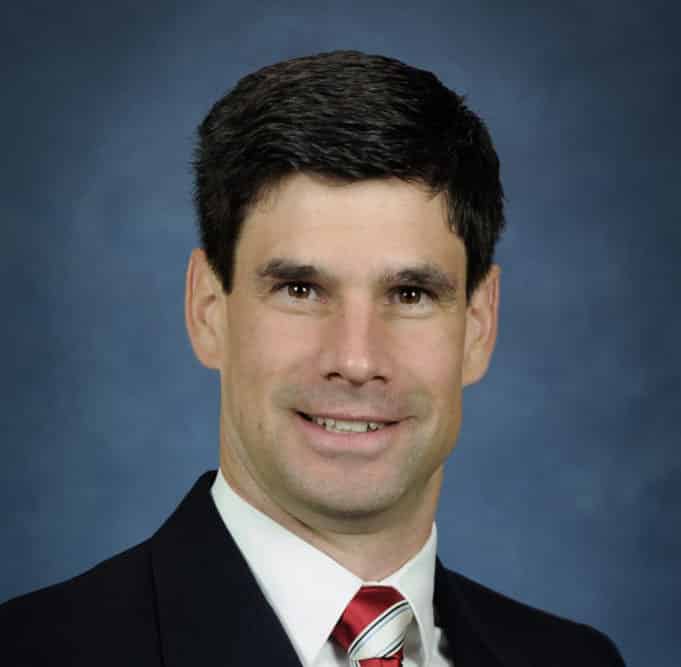
Stephen Zempel is assistant pastor at Falls Baptist Church and college administrator for Baptist College of Ministry in Menomonee Falls, WI. Stephen and his wife, Elizabeth, are passionate about training the next generation of harvest laborers.